Which Format Should You Choose? Keynote, Talk, Workshop or Virtual Session
The same content in the wrong format feels out of place. Four formats, what each is for, and three questions to decide in five minutes.
Carlos Agami · August 13, 2026
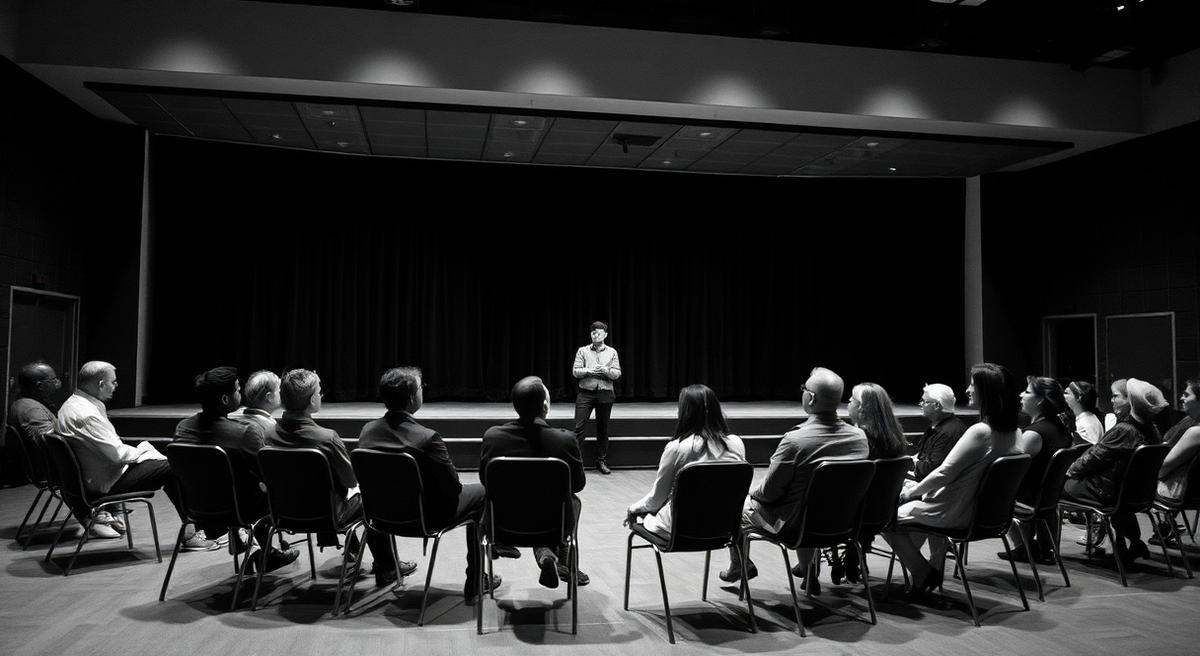
You've decided you want a speaker. Now comes the question almost nobody asks early enough: what format do you actually need?
It matters more than it looks. The same content, in the wrong format, feels out of place: a keynote where practice was needed, or a four-hour workshop when people only had energy for forty minutes.
The four formats and what each is for
### Short keynote · 45 minutes
Opens or closes an event. It gets everyone on the same frequency and leaves one clear idea.
Choose it when the agenda is tight, when there are several speakers, or when the talk is the inspirational moment inside a convention full of other content.
Don't choose it if you expect the team to leave with applied tools: 45 minutes is enough to shift how people think, not to train a skill.
### Full keynote · 60 to 90 minutes
The standard format, and the most requested one. There's time to tell stories, build an argument and reach concrete conclusions, with space for questions at the end.
Choose it for annual conventions, sales kickoffs, all-hands meetings and culture events.
It's the best ratio between impact and logistics: it fits any agenda and gives the message room to stand on its own.
### Half-day workshop · 3 to 4 hours
Here the team works. People practice, review their own cases, and fix real sales or service conversations.
Choose it when the goal isn't to inspire but to change a specific behavior: how a customer is greeted, how an objection is handled, how a visit is closed.
It needs smaller groups, a suitable room, and willingness to make mistakes in front of colleagues. In exchange, it's the format where change is most visible.
### Virtual session · 45 to 60 minutes
For teams spread across cities or countries.
Choose it when getting everyone in one room isn't viable, or when you want follow-up months after an in-person event.
It works well if the format is respected: cameras on, fewer people per session, and an exercise that breaks the passivity of a screen.
Three questions to decide in five minutes
**1. What has to happen the following Monday?** If the answer is "people feel proud of their work," a keynote is enough. If it's "they change how they treat a customer," you need a workshop.
**2. How many people are in the room?** Above two hundred, the keynote is the natural format. Below fifty, a workshop becomes possible and far more powerful.
**3. Is this a standalone event or part of a process?** If it's standalone, invest everything in one strong moment. If it's part of something bigger, combine: a keynote for everyone and a workshop for the key teams.
The combination that works best
When there's budget and time, the most effective format is rarely a single one: a keynote for the whole company, which installs the message and starts the conversation, followed by a workshop with the customer-facing teams, where that message becomes a way of working.
If you're not sure which one fits, write to us with the type of event, how many people will be there, and what you'd like to change afterward. We'll tell you honestly which format makes the most sense, even if it's the shortest one.
Full guide on this topic: Leadership.